
Dental Implants: 10 Things You Should Know That Most People Don't
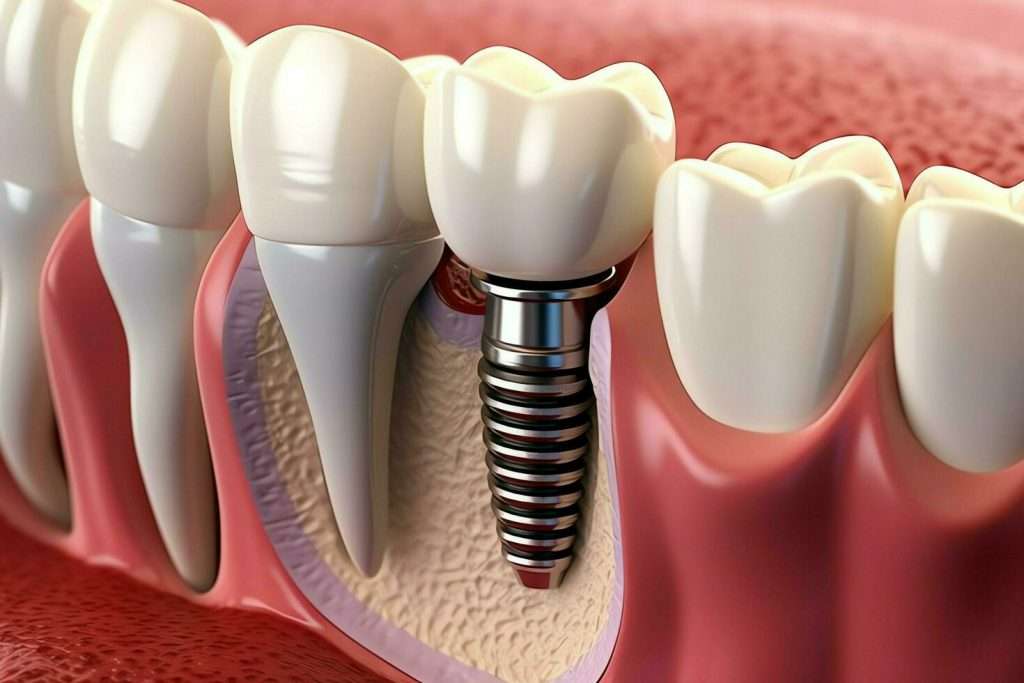
Dental implants replace the root of a tooth, not just the visible part, which is why they preserve the jawbone in a way bridges and dentures don’t. The trade off is time. Most cases run three to six months from placement to final crown.
People arrive with a reasonable mental model of a crown or a filling and almost none of an implant, which is understandable. It’s the only dental treatment that involves waiting months for something to happen inside the bone.
Here’s what’s worth knowing before you start.
1. The implant is the bit you never see
What gets placed is a small titanium post in the jawbone, replacing the root. The tooth shaped part on top is a crown, fitted later, and attached by a connector called an abutment.
Three components, placed at different times. When someone quotes you for “an implant”, check whether they mean the post alone or the whole thing finished.
2. The waiting is the treatment
Bone has to grow onto the surface of the post and lock it in place. That takes months, not weeks, and nothing speeds it up meaningfully.
It’s why the timeline runs the way it does, and why anyone promising a finished result in a fortnight is describing something else. Our dental implants page sets out the stages.
3. They protect the bone, which bridges and dentures don’t
This is the real argument for implants and it’s rarely explained well.
Jawbone maintains itself in response to load through a tooth root. Take the root away and the bone in that area gradually resorbs. A denture sits on top of the gum and does nothing to stop it, which is why long term denture wearers see their facial profile change and their dentures stop fitting. A bridge spans the gap using the teeth either side and leaves the bone underneath unloaded too.
An implant loads the bone directly. That’s the difference, and over fifteen or twenty years it’s a significant one.
4. A bridge means cutting down healthy teeth
The conventional alternative to a single implant is a bridge, which needs the teeth either side prepared, meaning healthy enamel removed so crowns can sit over them.
If those neighbouring teeth already have large fillings or crowns, that’s a reasonable trade. If they’re pristine, you’re damaging two good teeth to replace one missing one. Implants leave them alone.
5. Gum health decides whether you’re a candidate
Implants don’t get decay. They absolutely do get gum disease around them, and when they do it’s harder to treat than around a natural tooth.
Active gum disease gets treated and stabilised before any implant goes in. If it isn’t, you’re placing an expensive post into an environment that will attack it. Hygiene with a hygienist is £150 at our practice and our gum disease page covers the groundwork.
6. Smoking changes the odds
It reduces blood supply to the healing site and raises the failure rate measurably. Most practices will still treat smokers, with the risk explained up front, and some will ask you to stop for a period around the surgery.
Worth raising yourself if nobody asks you about it.
7. Sometimes the bone isn’t there any more
If a tooth has been missing for years, the bone has been resorbing that whole time, and there may not be enough left to hold an implant.
That’s not the end of it. Bone grafting rebuilds the site, and sinus work creates height in the upper back jaw. Both add months and cost to the plan. It’s also the best argument for not leaving a gap for a decade before deciding what to do about it.
8. The surgery is less dramatic than people expect
Local anaesthetic, usually under an hour for a single implant, and most people go back to work the next day. Sedation is available for nervous patients.
Compared with a surgical extraction, which many of the same patients have already been through, implant placement is generally the gentler appointment.
9. They need maintaining like teeth
Brush them, clean between them, and keep up hygiene appointments. Peri implantitis, which is gum disease around an implant, is the main cause of late failure and it’s largely preventable.
An implant is not a tooth you stop thinking about.
10. Dental implants aren’t automatically the right answer
For a single missing tooth with healthy neighbours, usually yes. For several missing teeth, an implant retained bridge may do the job with fewer implants than you’d expect. For a full arch, implant supported dentures sit on a handful of implants and transform stability.
But a patient with uncontrolled gum disease, or heavy unmanaged grinding, or a strong preference for avoiding surgery, may genuinely be better served by a well made bridge or denture. Any practice that recommends implants for every gap isn’t weighing it up.
Where we are
We’re at 2 Grosvenor Gardens, fourth floor, two minutes from Victoria station, and implant treatment means several appointments over a few months, so how easily you can get here is worth thinking about. Patients come from Belgravia, Pimlico and Westminster on foot, and from Chelsea, Knightsbridge, Mayfair and Marylebone easily enough. Wednesday and Thursday run to 8pm, Saturdays 9am to 5pm.
Common questions about dental implants
How long do dental implants last? Longer than a bridge or a denture, and the figure depends heavily on gum health and whether you grind. Well maintained implants in a healthy mouth last a very long time. Poorly maintained ones fail.
Does it hurt? The placement itself is done under local anaesthetic and isn’t painful. Expect soreness and some swelling for a few days afterwards, managed with normal painkillers.
What does it cost? It depends on whether grafting is needed and how many teeth are involved, so we price it against your own x rays rather than off a list. Ask at the assessment and you’ll get a written figure before you commit to anything. Our other published pricing is on the 2026 fees page.
Can I have one if I’ve been wearing a denture for years? Often yes, sometimes with grafting first. An x-ray answers it.
Will anyone be able to tell? A well made implant crown is shaded and shaped to match the teeth around it. See our before and after gallery.
Book an implant assessment
The assessment is where you find out whether the bone is there, what the timeline would be, and what it costs. Call 020 3858 0068 or book online.
Boston Orthodontics, 2 Grosvenor Gardens, 4th Floor, Belgravia, London SW1W 0DH. More on our implant treatment page.
MOST POPULAR TREATMENTS
Our Services

Our Doctor
Meet Doctors

Dr. Elif Keser
Specialist Orthodontist

Dr. Tania Rafael Garcia
Dental Surgeon

Dr. Gustavo Silva
Dental Surgeon
