
Elif Keser

Dr. Elif Keser

Specialist Orthodontist

Dr. Elif Keser is an Adjunct Assistant Professor in Orthodontics at Boston University Henry M. Goldman School of Dental Medicine. She was acting program director of orthodontics and dentofacial orthopedics at Boston University Institute of Dental Research and Education in Dubai. She has worked extensively in management of multidisciplinary treatments with Dr. Galip Gurel in Istanbul, and has been working together with Dr. Dibart on Piezocision since 2009 at Boston University. She has a private practice in London, UK. She has published articles and book chapters and has been an internationally recognized speaker about accelerated orthodontics. Some journals she has published in are American Journal of Orthodontics and Dentofacial Orthopedics, Seminars in Orthodontics and Maxillofacial Plastic and Reconstructive Surgery.

Articles Written

baby sleeping while thumb sucking

How to Stop Thumb Sucking: 7 Effective Ways

How to Stop Thumb Sucking: 7 Effective Ways Thumb sucking is one of those habits that feels harmless at first, almost like a natural part of early childhood. Many infants instinctively find comfort in it, and for a while, there’s little cause for concern. But as the months pass and
Read More »
child sitting in a dental clinic chair smiling at a dentist

Space Maintainers: What Is It and When Do You Need It?

Space Maintainers: What Is It and When Do You Need It? When a child loses a baby tooth earlier than expected, it’s easy to assume that nothing needs to be done until the permanent tooth arrives. But that gap isn’t just an empty space; it’s an open invitation for surrounding

Read More »
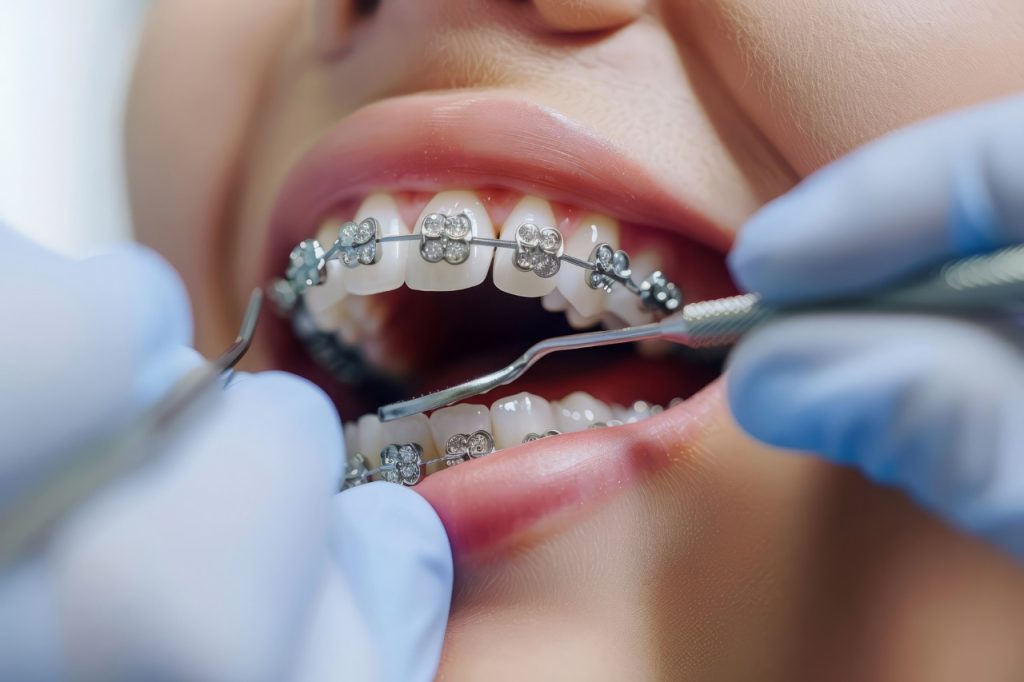
Orthodontist Examines Braces on Patient's Teeth During Dental Appointment

Fixed Braces vs Removable Braces: Pros and Cons

Fixed Braces vs Removable Braces: Pros and Cons Orthodontic treatment has shifted dramatically over the past decade. Patients aren’t restricted to the classic metal brackets anymore; the range of options is broader, subtler, and often more comfortable. Yet the choice between fixed braces and removable braces remains one of the

Read More »
young woman wearing braces smiling

Accelerated Orthodontics: What Is It and How Does It Work?

Accelerated Orthodontics: What Is It and How Does It Work? Straightening teeth is rarely as simple as slipping on a set of braces and waiting. Traditional orthodontic treatment can stretch over years – sometimes longer than expected – while people grow restless with the slow progress. That’s where accelerated orthodontics

Read More »
Realistic dental model showcasing human teeth and gums against a pink background in a clinical setting

Interproximal Reduction (IPR): Purpose and Benefits

Interproximal Reduction (IPR): Purpose and Benefits If you’ve been told you’ll need interproximal reduction – or IPR – as part of your orthodontic treatment, you might be picturing something far more dramatic than it actually is. And we get it. The idea of “stripping” enamel between teeth can sound slightly

Read More »
close up shot of blue retainers

How to Clean Retainers: A Step-by-Step Guide

How to Clean Retainers: A Step-by-Step Guide It’s easy to underestimate the importance of retainer care – especially once the “active” phase of orthodontic treatment is behind you. But if you’re wearing a retainer (whether fixed or removable), it’s not a suggestion; it’s an ongoing part of your dental health

Read More »
Smiling woman shows off braces

What Are Self Ligating Braces?

What Are Self Ligating Braces? When most people picture braces, they imagine the familiar setup: metal brackets, wires, and colourful little elastic bands holding everything in place. But there’s a newer player in town – one that looks similar on the surface but functions quite differently behind the scenes. Enter

Read More »
Miniature figurines and a human mouth model

Lingual Braces: Pros and Cons

Lingual Braces: Pros and Cons If you’ve been researching discreet orthodontic options, you’ve probably come across lingual braces – a treatment that places brackets and wires on the inside surface of your teeth, rather than the outside. At first glance, they might seem like the ideal solution: no visible hardware,

Read More »