
Gummy Smile Causes: Why It Happens and What Can Actually Be Done
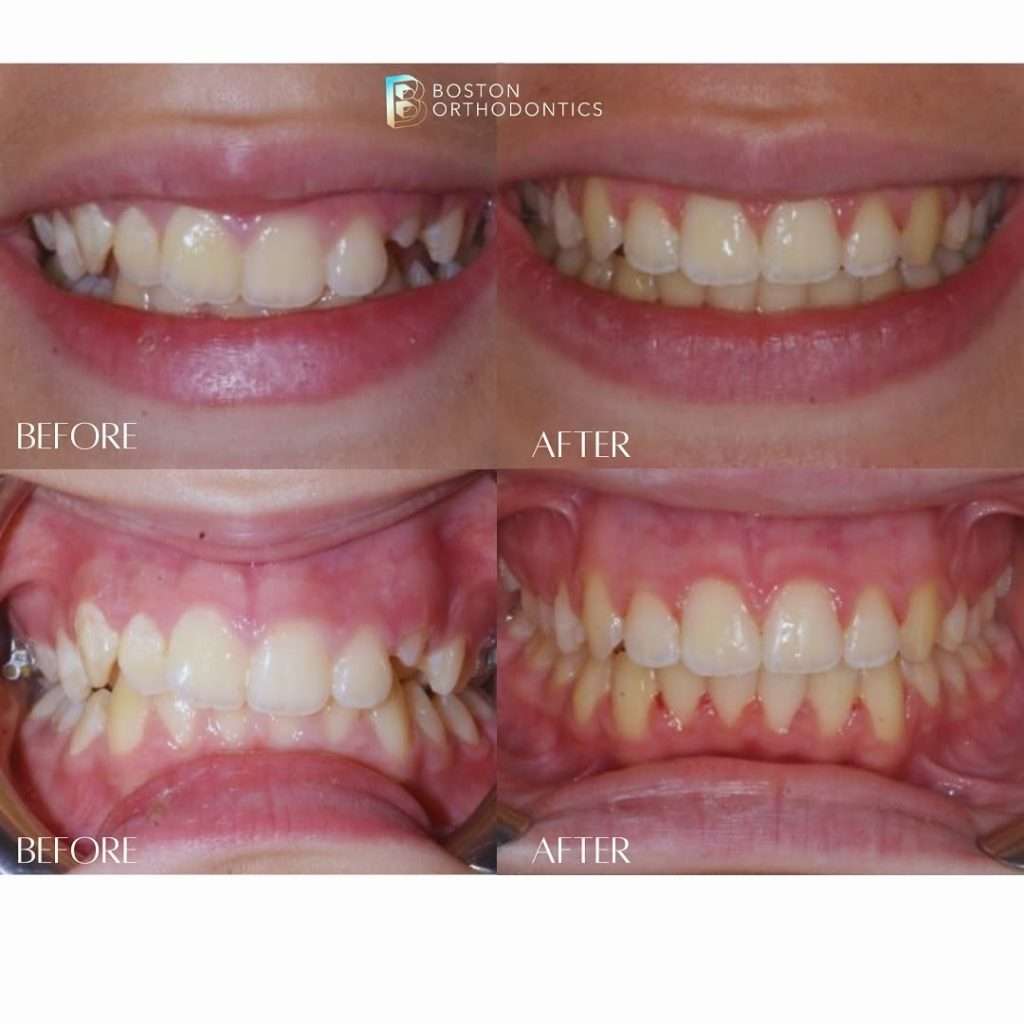
A gummy smile has four possible drivers: tooth position, gum tissue, the vertical position of the upper jaw, and how far the upper lip lifts. The right treatment depends entirely on which one is yours, and the four do not respond to the same thing. Orthodontics fixes one of them.
Two people can have smiles that look identical and need completely different treatment. That is the whole reason this is worth assessing properly rather than booking the first thing a clinic offers.
The four causes
Tooth position and size. The teeth may be a normal length but sit in a position, or be covered by enough gum, that they look short. The proportion between tooth and gum is off even though nothing about the gum is unusual.
Excess gum tissue. Some people simply have more gum covering the visible part of the tooth. The tooth underneath is a normal length. It is just partly hidden.
Jaw position. The upper jaw sits at a different vertical height from person to person. Where it sits lower, more gum shows when you smile, and no amount of work on the teeth or gums changes that.
Lip movement. Some upper lips naturally lift further during a smile, exposing more gum because of how the muscle moves. Nothing about the teeth or gums is unusual at all.
More than one can be in play at once, which is common and worth knowing before anyone quotes you for a single treatment.
What each one actually responds to
This is where the honest answer differs from the marketing.
Tooth position responds to orthodontics. Moving the teeth changes their relationship with the gum line, and where position is the main driver, the result is real and lasting. Our clear aligner and fixed brace pages cover what that involves.
Excess gum tissue responds to gum-focused treatment, not to orthodontics. Moving teeth in a case driven by gum volume changes very little, which is why the assessment comes first.
Jaw position is the hardest. Significant vertical excess in the upper jaw is a skeletal problem, and correcting it properly can mean combined orthodontic and surgical treatment rather than anything either discipline does alone.
Lip movement responds to relaxing the muscle that lifts the upper lip, which is one of the areas listed on our facial aesthetics page. It is not permanent, it needs repeating, and it does nothing for the other three causes.
Why the assessment is the whole job
A clinic that offers you one treatment before examining your bite, your gum line and your lip movement together is selling you what it happens to do rather than what your smile needs. The assessment is not a formality here. It is the part that decides whether the answer is braces, a gum procedure, a muscle treatment, or a combination.
It is also the part that tells you honestly when the answer is “less than you hoped”. A gummy smile driven mainly by jaw position does not have a simple fix, and you are better off knowing that at the start than three months into treatment that was never going to address it.
Can it be treated without surgery?
In most cases, yes. Where tooth position is the main driver, orthodontics alone does the work. Where lip movement is the driver, a muscle treatment does. Surgery enters the conversation mainly where the upper jaw’s vertical position is the dominant cause, and that is the minority of cases rather than the default.
Which applies to you depends on your own anatomy, which is what the examination establishes.
Where we are
We are at 2 Grosvenor Gardens on the fourth floor, two minutes from Victoria station, with patients walking in from Belgravia, Pimlico and Westminster and arriving in minutes from Chelsea, Knightsbridge and Mayfair. Orthodontics and general dentistry run under one roof here, which matters for a problem that can cross both. We are open until 8pm on Wednesdays and Thursdays and Saturdays 9am to 5pm.
Common questions
What causes a gummy smile? Tooth position, gum tissue volume, the vertical position of the upper jaw, or how far the upper lip lifts when you smile. Often more than one at once.
Can orthodontic treatment fix it? Where tooth position is the main contributor, yes. Where the driver is gum volume or lip movement, moving the teeth changes very little.
Is there a non-surgical option? For most causes, yes. Surgery is mainly relevant where the upper jaw’s vertical position is the dominant factor.
How do I know which cause is mine? An examination of the bite, the gum line and the lip in movement together. It is not something to judge from a photograph.
Will it come back after treatment? Orthodontic and gum results are lasting. A muscle treatment for lip movement is temporary and needs repeating every three to four months.
Find out what is actually behind yours
A consultation is £275, deducted from your treatment cost if you go ahead, and you leave knowing which of the four is driving your smile and what that actually means. Book online or call 020 3858 0068.
Boston Orthodontics, 2 Grosvenor Gardens, 4th Floor, Belgravia, London SW1W 0DH. Full pricing on the 2026 fees page.
MOST POPULAR TREATMENTS
Our Services

Our Doctor
Meet Doctors

Dr. Elif Keser
Specialist Orthodontist

Dr. Tania Rafael Garcia
Dental Surgeon

Dr. Gustavo Silva
Dental Surgeon
