
Choosing a Child Orthodontist in London: 8 Questions Parents Should Ask
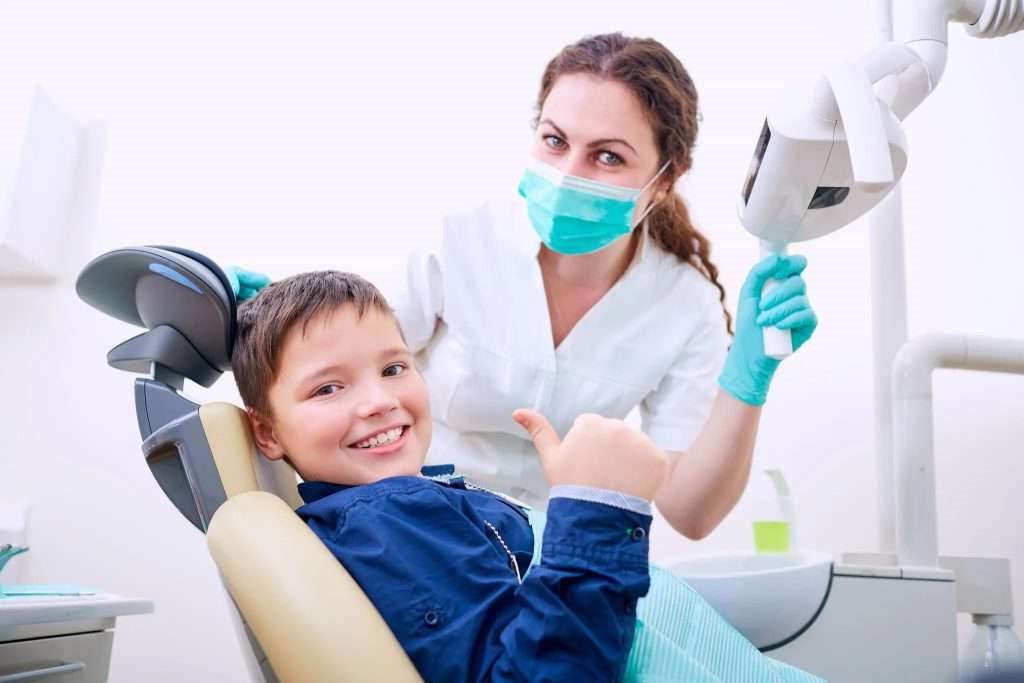
Choose a child orthodontist in London on four things: whether they’ll tell you to wait, who runs the appointments, what the quote covers including retainers, and how they handle a child who isn’t coping. Price is the easiest thing to compare and the least useful.
Most parents come to us having been told by a dentist that their child “might need braces at some point”, which is accurate and completely unhelpful for deciding what to do next. Picking a child orthodontist on price alone is how that uncertainty turns into the wrong treatment at the wrong age.
Here’s what to ask, and what a good answer sounds like.
1. Does my child need treatment now, or should we wait?
The single most useful question, and the answer you want to be open to is “wait”.
Some problems genuinely benefit from early intervention: a crossbite pushing the jaw sideways, a severe overbite in a child doing contact sport, crowding so tight that adult teeth have nowhere to come through. Many others are better left until most of the adult teeth have arrived, usually around eleven to thirteen.
A practice that recommends treatment for every seven year old through the door isn’t assessing, it’s booking. Our early orthodontic treatment page explains which problems actually warrant starting young.
2. What happens if we wait, and what does that cost us?
Follow up the first question with this one. You want to know the consequence of waiting, specifically.
Sometimes the honest answer is “nothing, we review in a year”. Sometimes it’s “the upper jaw stops being easy to widen once growth slows, so waiting means a longer treatment later”. Both are fine answers. What you don’t want is vagueness, because vagueness usually means nobody has thought about your child in particular.
3. Will the same child orthodontist see my child each time?
Children’s treatment runs for one to three years, which is a long time to be seeing a rotating cast.
Ask whether the same clinician runs every appointment or whether the orthodontist plans and someone else carries out. Both models exist and both can work. With children it matters more than with adults, because a nervous nine year old who has built a rapport with one person does not want to start again every eight weeks.
4. What does the full treatment cost, start to finish?
Early treatment starts at £2,500 at our practice and the consultation that produces a written plan is £275, which comes off the treatment cost if you go ahead. Child exams are £120 and hygiene for under sixteens is £120. The 2026 fees page lists the rest.
The thing to check in any quote, anywhere, is where it stops. Does it include retainers? Does it include the second phase if your child needs one after the adult teeth arrive? Two phase treatment quoted as one phase is the most common way a children’s quote ends up thousands short.
5. How do you handle a child who won’t wear the appliance?
Every practice has a plan for this because every practice meets it. Ask what theirs is.
Removable appliances and aligners depend entirely on a child wearing them. Some children are meticulous. Others leave them in a school bag for a fortnight. A good answer involves switching to something fixed rather than running the same failing plan for another six months and blaming the child at the end of it.
6. What about school, exams and sport?
Appointments during the school day are the practical problem nobody mentions at the consultation.
Ask how often you’ll be coming in, whether they can cluster appointments outside school hours, and what happens during exam season. We run until 8pm on Wednesdays and Thursdays and open on Saturday mornings, which is why most of our younger patients miss very little school. If your child plays rugby or hockey, ask about a mouthguard over fixed braces before treatment starts rather than after the first collision.
7. Will my child’s teeth need to come out?
Sometimes, for severe crowding, and less often than parents fear.
What you want is an explanation of the alternative and why it was or wasn’t chosen. Expansion to create room, slower movement over a longer period, or extraction to create space quickly. Each has a trade off. A child orthodontist who says “we’ll need to take four out” without explaining what the non extraction route would have involved hasn’t finished the conversation.
8. What does retention look like for a child?
Teeth move for life and children have a lot of life left.
Expect retainers, expect them to be needed long after treatment finishes, and expect to replace a few over the years because children lose things. Ask what replacements cost before you need one. It’s a small number that becomes annoying if it surprises you five years in.
Seeing a child orthodontist in Belgravia
We’re at 2 Grosvenor Gardens on the fourth floor, two minutes from Victoria station, which for school runs across Belgravia, Pimlico and Westminster is walkable, and straightforward from Chelsea, Knightsbridge or Marylebone. The practice is on an upper floor, so if you’re coming with a buggy as well as an older child, there’s a lift. Late appointments on Wednesdays and Thursdays and Saturday mornings exist because taking a child out of school every six weeks is nobody’s idea of a good arrangement.
Common questions from parents
At what age should my child first see a child orthodontist? Around seven is the usual recommendation for a first assessment. That does not mean treatment at seven. It means someone looks at how the jaws are developing while there’s still time to influence it.
Do I need a referral? No. You can book an assessment directly, though it helps if your dentist sends over any recent x-rays.
Is NHS orthodontic treatment available for children? It is, through NHS practices, for cases that meet the clinical need criteria, and there are usually waiting lists. We’re a private practice, so if cost is the deciding factor it’s worth asking your dentist about an NHS referral as well as getting a private assessment.
Will my child be in pain? Sore for two or three days after fitting and after each adjustment, manageable with normal painkillers. Not pain as such, more an ache when biting. It fades and children adapt to it faster than adults do.
Can my child have Invisalign instead of braces? Often yes, depending on the case and on whether they’ll wear it. See our Invisalign for kids and Invisalign for teens pages.
Book an assessment
If you want a straight answer on whether your child needs treatment now or in three years, that’s what the assessment is for. Book a consultation or call 020 3858 0068.
Boston Orthodontics, 2 Grosvenor Gardens, 4th Floor, Belgravia, London SW1W 0DH. More on children’s treatment on our children’s braces page.
MOST POPULAR TREATMENTS
Our Services

Our Doctor
Meet Doctors

Dr. Elif Keser
Specialist Orthodontist

Dr. Tania Rafael Garcia
Dental Surgeon

Dr. Gustavo Silva
Dental Surgeon
