
Can Braces Change Your Jawline?
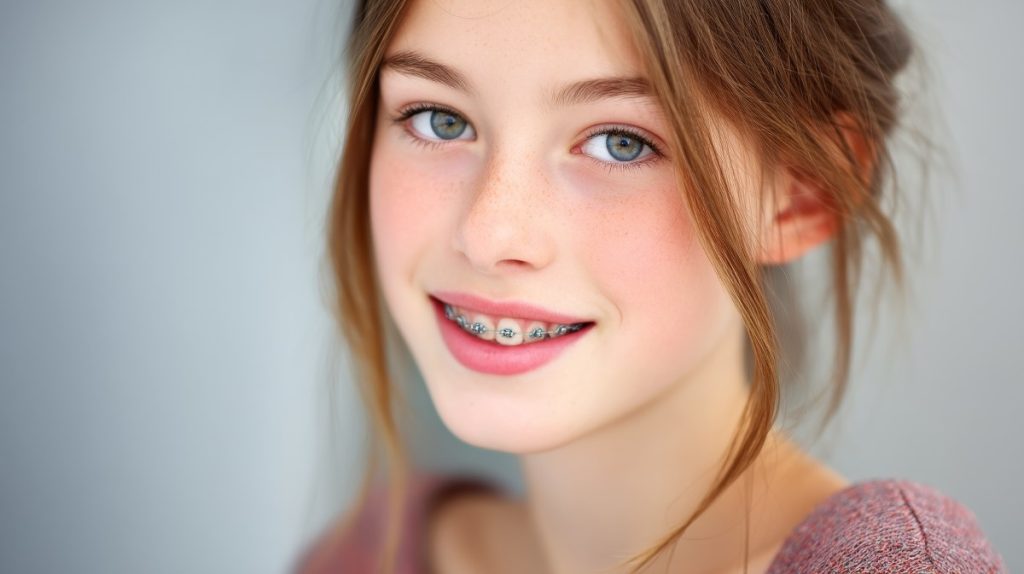
The before-and-after photos are striking. A face that looks slightly off somehow, then two years later the same person with what appears to be an entirely new jawline; sharper, more defined, more symmetrical. Social media is full of these transformations, often credited to braces alone, and it’s raised a reasonable question: how much of your face is actually being reshaped when you straighten your teeth?
The honest answer is: more than you’d think, but less than some of the more enthusiastic TikTok accounts would have you believe.
The Difference Between Teeth Moving and Bones Moving
Braces, fundamentally, move teeth. They apply sustained pressure to shift teeth through the bone they sit in, using your own biology to remodel the socket as the tooth migrates. This is a precise process and it works brilliantly for crowding, spacing, rotation, and most bite issues. What braces do not do is move your actual jawbones around in their joints.
That distinction matters because a lot of what people call “jawline” is actually a combination of things: the position of your teeth, the soft tissue sitting over the bone, the angle at which your lower jaw hangs, and the underlying skeletal structure of the mandible and maxilla themselves. Braces can affect some of those directly, influence others indirectly, and leave a few entirely untouched.
In adults, the skeletal bones themselves are fully formed and don’t reshape. In children and adolescents whose growth plates are still active, orthodontic treatment combined with functional appliances can influence how the jaw develops, which is a different proposition.
How Do Braces Actually Change Your Face?
The changes fall into three categories. First, there’s the direct effect of tooth movement on the lips and lower face. If your front teeth were protruding, pulling them back allows the lips to sit differently and the profile to soften. If your teeth were retruded, bringing them forward provides more support for the lips and a fuller lower face. These changes are real and visible, though usually subtle.
Second, correcting a bad bite alters how your jaws rest against each other. In an untreated overbite, the lower jaw is often held further back than its natural position, which can make the chin look recessed and the face appear longer. Once the bite is corrected, the lower jaw can sit in a more forward and relaxed position, changing the profile meaningfully. The same principle applies in reverse for an underbite.
Third, jaw muscles themselves adapt. If you’ve been clenching, grinding, or holding your jaw tensely to compensate for a bad bite, those muscles often hypertrophy; meaning they become overdeveloped. Once the bite is comfortable, the muscles relax, and over months the masseter can shrink noticeably. This alone can change the width and shape of the lower face.
What Braces Can’t Do on Their Own
Braces cannot genuinely reshape your mandible. If your chin is set back because your lower jaw is structurally small, no amount of bracket work is going to extend it. If your maxilla is narrow, braces can correct the tooth positions but the underlying bone width isn’t going anywhere.
For skeletal discrepancies of this kind, the realistic options are functional appliances during adolescence, palate expanders in younger patients whose mid-palatal suture hasn’t fused, or orthognathic surgery in adults. Surgery is a significant undertaking, but for severe cases it produces facial changes that braces simply cannot.
It’s worth being honest about this because unrealistic expectations do real damage. If you’re in your thirties with a recessed chin caused by a small lower jaw, and you’re hoping braces will sort it out, you’re going to be disappointed. A good orthodontist will tell you this at the first consultation and lay out what can and can’t change.
Will Correcting My Bite Change My Face Shape?

Sometimes significantly, sometimes subtly. It depends entirely on what you started with.
Deep overbites, where the upper teeth cover the lower teeth too far, tend to create a short-looking lower face. Correcting them often lengthens the lower face slightly and lets the chin come forward into a more prominent position. Open bites, where the front teeth don’t meet at all, can make the face appear longer than it needs to, and closing the bite can subtly shorten and balance the lower face.
Crossbites frequently produce asymmetry, because the jaw shifts sideways to find a comfortable bite. You might not notice you’re doing it, but over years the soft tissue and muscle development on each side can differ. Correcting a crossbite often brings the jaw back to centre, and the asymmetry that comes with it tends to soften. Patients frequently report looking more balanced in photographs after treatment, even when they hadn’t quite articulated the asymmetry beforehand.
Why the Jawline Appears to Change in Photos
Some of what you’re seeing in before-and-after shots is genuine. Some of it isn’t.
Teeth straightening changes how people smile. A closed-mouth or awkward smile loosens into something more natural, and the muscles around the mouth settle into new patterns. Posture changes subtly as patients stop hiding their teeth. Weight often shifts over the course of a two-year treatment window, which affects how the face looks far more than most people realise. Lighting, angle, camera lens, and the simple fact of maturing over two years all contribute.
All that said, the skeletal relationship underlying the face can genuinely shift once the bite is in the right place. It’s not an illusion, but it’s also not sorcery. The actual mechanism is muscle relaxation, postural change, and improved soft tissue support rather than bone remodelling.
What Age Does This All Happen At?
The dramatic skeletal changes occur in growing patients. A teenager with a severe overbite who wears a functional appliance during their growth spurt can end up with a substantially different jaw position than they would have developed naturally. This is why orthodontists flag bite problems early and why some treatments are staged across multiple phases.
Adults see changes too, but they’re of a different character. An adult can expect improved lip support, better facial symmetry, muscle relaxation, and a more confident expression. They cannot expect their jawbones to grow. Anyone promising otherwise, without involving surgery, is not being straightforward with you.
Our team at the Boston Orthodontics London clinic sees both groups frequently; adults chasing the aesthetic changes they missed in childhood, and parents bringing in teenagers at exactly the right developmental window to do more comprehensive work. The conversations with each are quite different, because the biology is quite different.
So Is It Worth It for Facial Changes Alone?
If facial change is your only goal, it depends on what kind of change you’re looking for. A more balanced profile, better lip support, relaxed jaw muscles, and improved symmetry are all realistic. A completely new chin, a broader jaw, or the kind of dramatic masculine or feminine restructuring you see on cosmetic surgery accounts, is not.
Braces work on teeth. The face responds to the teeth, sometimes beautifully and sometimes modestly, but the teeth are where the treatment actually happens.
Book Your Dental Checkup Today
Ready to take control of your oral health? Whether it’s your first visit or a routine cleaning, regular dental checkups make all the difference. Our expert team is here to help you maintain a strong, confident smile.
MOST POPULAR TREATMENTS
Our Services

Our Doctor
Meet Doctors

Dr. Elif Keser
Dentist

Dr. Tania Rafael Garcia
Dental Surgeon

Dr. Gustavo Silva
Dental Surgeon
