
Adult Braces: 9 Things an Adult Orthodontist Wishes Patients Had Asked Sooner
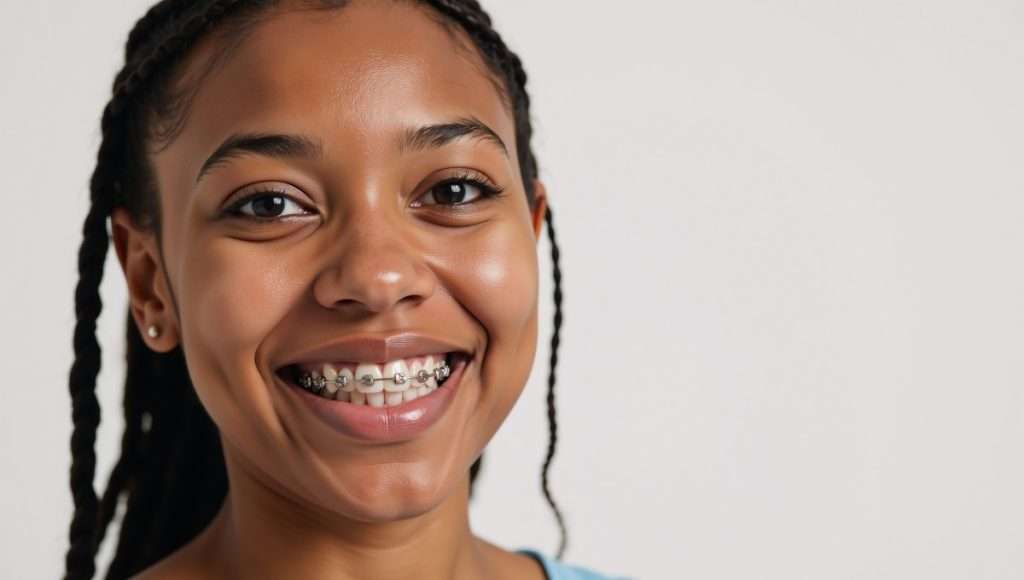
Adults get the same results as teenagers from orthodontic treatment, they just take a little longer to get there. The questions that matter most are about discretion at work, what happens to your speech, whether old dental work complicates things, and how retention works for the rest of your life.
Roughly half the people who sit down in our chairs are over twenty five. Almost all of them open with some version of the same sentence, which is that they’ve been thinking about this for years and assumed they’d left it too late.
You haven’t. Bone remodels at any age. Here are the questions worth asking an adult orthodontist before you start.
1. Will anyone at work notice?
This is the real question under most adult consultations and people circle it for ten minutes before asking it.
The honest answer depends on which appliance you choose. Clear aligners are difficult to spot across a meeting room and you take them out to eat. Ceramic brackets are visible up close and nearly invisible at conversational distance. Lingual braces sit behind the teeth and nobody sees them at all. Standard metal brackets, people notice.
2. What happens to my speech?
Something happens, briefly, with every appliance that sits near the tongue.
Aligners give most people a mild lisp for a few days. Lingual braces are more noticeable because the brackets sit where your tongue goes for S and T sounds, and two to three weeks is the usual adjustment. If you present or teach for a living, start treatment the week after a big speaking commitment, not the week before. An adult orthodontist should ask you what you do for work for exactly this reason.
3. Does my existing dental work complicate it?
Often, and it’s one of the main differences between treating an adult and a teenager.
Crowns, veneers, bridges, implants and old root fillings all behave differently from natural teeth when you move them. An implant doesn’t move at all, so it has to be planned around. A crown needs a different bonding approach for the bracket. None of this stops treatment, but it has to be mapped before you start rather than discovered in month three.
4. Why does it take longer than it did for my cousin’s teenager?
Adult bone is denser and remodels more slowly. That’s the whole explanation.
Expect a case that would take a fourteen year old twelve months to take you fifteen to eighteen. It isn’t a reason not to do it, it’s a reason to be realistic at the start so you’re not disappointed at the halfway mark.
5. Are my gums up to it?
This is the one adults skip and the one that matters most.
Gum recession and bone loss are far more common at forty than at fourteen, and moving teeth through compromised tissue makes both worse. Any adult orthodontist should insist on a gum assessment before treatment, and if there’s active disease, that gets treated first. It isn’t a delay tactic. A hygiene appointment and a few months of stability is cheaper than losing a tooth you’d just spent eighteen months straightening.
6. What will it cost, honestly?
At our practice Invisalign starts at £3,500 and fixed braces at £6,500, and the consultation that gets you a written plan is £275. Complex adult cases sit above those starting figures and the plan says so before you commit to anything.
The full list is on our 2026 fees page and there are finance options if you’d rather spread the cost. What you should check in any quote, here or anywhere, is whether retainers are included at the end.
7. What does retention actually involve?
Forever. That’s the part nobody enjoys hearing.
Teeth drift throughout life, treated or not, and the drift is strongest in the first year after braces come off. Most adults end up with a thin wire bonded behind the front teeth and a clear retainer worn at night, dropping to a few nights a week over time. Stop wearing it entirely and things move. I’ve retreated people who had beautiful results at twenty three and stopped wearing retainers at twenty five.
8. Can I do it while I’m pregnant, travelling, or mid house move?
Usually yes, with planning.
Pregnancy isn’t a barrier to orthodontic treatment, though gums become more reactive and hygiene appointments matter more. Heavy travel suits aligners over fixed braces. Tell the practice what your next eighteen months look like before the plan gets written, because an adult orthodontist can design around a known six week trip far more easily than around a surprise one.
9. What if I only care about the front six?
Then say so, and listen carefully to the answer.
Short treatments that straighten only the visible front teeth exist and they suit some people very well. They also leave the bite exactly as it was, which is fine if your bite is healthy and a problem if it isn’t. The honest version of this conversation is an orthodontist explaining what a front six treatment will and won’t fix, and letting you choose with that in front of you.
Getting to us
We’re at 2 Grosvenor Gardens, fourth floor, about two minutes from Victoria station. That makes us straightforward for anyone working in Westminster, Belgravia or Pimlico, and an easy run from Mayfair, Marylebone, Chelsea or Knightsbridge. Appointments run until 8pm on Wednesdays and Thursdays and we’re open Saturday mornings, which is how most of our working adults manage it without using annual leave.
Common questions about adult braces
Am I too old for braces? No. Healthy gums and bone matter, age doesn’t. We treat people in their fifties and sixties regularly.
Will braces damage my teeth? Not when hygiene holds up. The risk is decalcification around brackets in people who don’t brush well, which is why hygiene appointments during treatment are part of the plan rather than an extra.
Can I get adult braces if I had them as a teenager? Very commonly, yes. Relapse after teenage treatment is one of the most frequent reasons adults come back, usually because retainers stopped getting worn.
Do I have to have teeth removed? Sometimes, for crowding, and far less often than people fear. An adult orthodontist should explain the non extraction alternative and why it was or wasn’t chosen for your case.
Book an adult assessment
If you’ve been putting this off, a consultation gets you a written plan, a price and a scan of your own bite to look at. Book online or call 020 3858 0068.
Boston Orthodontics, 2 Grosvenor Gardens, 4th Floor, Belgravia, London SW1W 0DH. More on the treatments themselves on our orthodontics and Invisalign pages.
MOST POPULAR TREATMENTS
Our Services

Our Doctor
Meet Doctors

Dr. Elif Keser
Specialist Orthodontist

Dr. Tania Rafael Garcia
Dental Surgeon

Dr. Gustavo Silva
Dental Surgeon
