
The Importance of Arch Form in Smile Design
Show two photographs of attractive smiles to a layperson and they’ll likely struggle to articulate exactly why one feels harmonious and the other doesn’t. They’ll mention tooth colour, perhaps gum exposure, maybe the size of the front teeth. Almost no one names the actual variable doing most of the work: the arch form.
Arch form is the curve along which your upper and lower teeth are arranged, viewed from above or below. It’s the underlying geometry that determines whether a smile feels balanced, broad, and natural, or narrow, pinched, and slightly off in a way that’s hard to define. Orthodontists think about arch form constantly. Patients almost never think about it at all. Bridging that gap matters, because the arch you end up with has more influence on your finished smile than almost any other variable.
What Is the Dental Arch?
Your dental arch is the U-shaped curve formed by your teeth as they sit in the jaw. You have two: the maxillary arch (upper teeth) and the mandibular arch (lower teeth). When they fit together properly, the upper arch sits slightly outside the lower, with the front teeth meeting cleanly and the back teeth interlocking in a way that distributes biting forces evenly.
Arch form varies considerably between individuals. Some are narrow and tapering, almost V-shaped from above. Others are broad and rounded, sometimes called square or ovoid. Most fall somewhere between these extremes, with the ideal form for any given face depending on bone structure, lip support, and overall proportions.
What matters clinically isn’t matching some textbook ideal but creating an arch that suits the specific patient: their face shape, their lip line, their underlying skeletal structure, and their existing tooth positions.
How Arch Form Shapes a Smile
The visible part of any smile, what photographers call the “smile arc,” is essentially a window onto the upper arch. When you smile broadly, you reveal the front six to ten teeth and sometimes more, all sitting along the curve of your maxillary arch. The shape of that curve influences several aspects of how your smile reads.
A broad arch fills the corners of the mouth when you smile, eliminating the dark spaces (called “buccal corridors”) that can appear at the sides of a narrow smile. Smiles with minimal buccal corridors generally read as fuller and more vibrant than those with prominent dark spaces, particularly in photographs.
Arch form also dictates how the front teeth display. A well-shaped arch has the upper front teeth following the gentle curve of the lower lip, creating what’s called a “consonant smile arc” where the line of the teeth echoes the line of the lip. Arches that are too flat produce smiles where the front teeth appear shorter than their neighbours, which photographers and orthodontists alike recognise as aesthetically weaker.
The lateral incisors (the teeth either side of your front two) are particularly affected. In a well-formed arch, they sit in slight harmony with the central incisors and canines. In a poorly-formed arch, they often look noticeably narrow, slightly recessed, or out of proportion, and patients sometimes blame the teeth themselves when the actual problem is the curve they’re sitting on.
Why Arch Form Goes Wrong
Several factors can produce an arch form that’s working against your smile rather than for it.
Genetic predisposition is the most common. Many people simply inherit a narrow palate or a tapered arch, and grow into adulthood with a smile that lacks the breadth their face would naturally suit. Crowding (where teeth don’t have enough space and overlap) is often the visible symptom of an underlying arch form issue rather than a problem with the teeth themselves.
Childhood habits affect arch development too. Prolonged thumb sucking or extended use of pacifiers can narrow the upper arch. Mouth breathing during the developmental years often correlates with narrower, higher palates. These influences shape the arch during the years when bone is still actively growing.
Previous orthodontic treatment, somewhat counterintuitively, can also produce poor arch form. Extraction-based treatment plans from earlier decades sometimes resulted in narrowed arches with collapsed buccal corridors, particularly when first premolars were removed without careful attention to the resulting arch shape. Many adult patients seeking orthodontic correction today have had previous treatment that addressed crowding without fully considering how the finished arch would look.
How Modern Orthodontics Approaches Arch Design

Contemporary orthodontic treatment doesn’t just move teeth into straight lines; it actively designs the arch form during treatment. The orthodontist considers the patient’s face shape, lip support, smile dynamics, and skeletal structure, then plans tooth positions to produce an arch that suits the individual.
Expansion is sometimes part of this planning. Patients with narrow upper arches can often have the arch widened during treatment, either using rapid palatal expansion in younger patients or slower, gentler expansion through aligners and braces in adults. The result is a fuller smile with reduced buccal corridors and better facial harmony.
For patients without underlying skeletal narrowness, the focus shifts to controlling tooth angulation and positioning to optimise the arch shape. Small differences in how teeth are torqued and positioned along the arch can produce meaningful differences in the finished smile aesthetic.
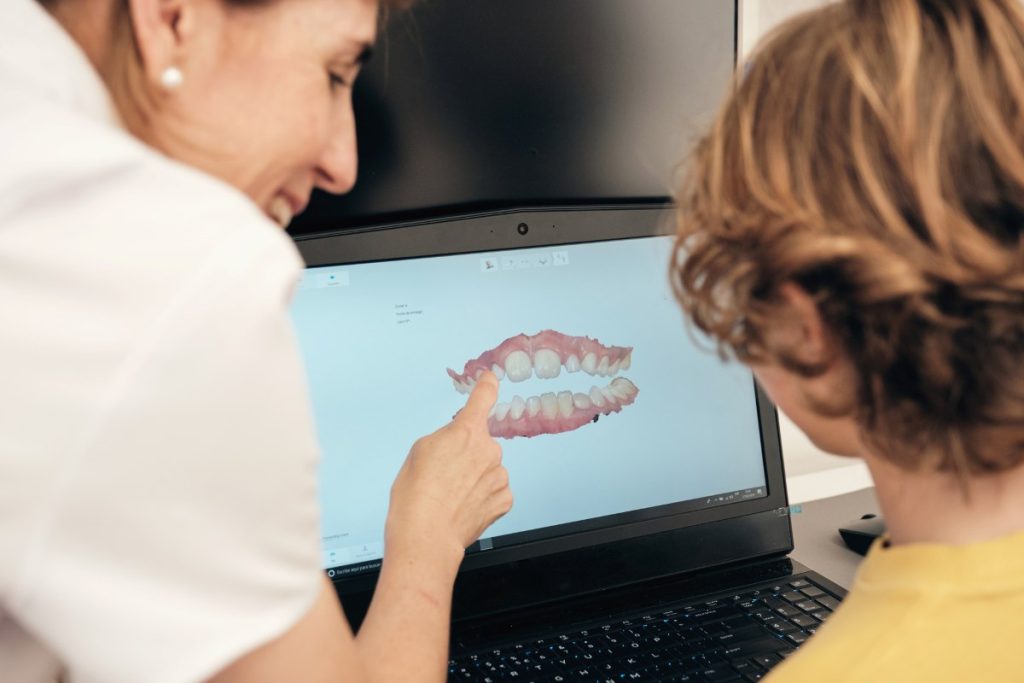
Digital treatment planning has made this kind of arch-conscious design considerably more precise. With 3D models of the starting position, the orthodontist can plan the arch form they want to finish with and design tooth movements to achieve it, rather than simply straightening what’s there.
The Distinction From Pure Cosmetic Work
The difference between orthodontics and cosmetic dentistry becomes particularly relevant in conversations about smile design. Veneers and cosmetic restorations can change how individual teeth look, but they can’t fundamentally reshape the arch the teeth sit on. If your smile feels narrow because of the underlying arch form, no amount of cosmetic work on the visible surfaces will fix the problem.
This is why orthodontists and restorative dentists increasingly collaborate on complex cases. Orthodontic treatment can establish the right arch form and tooth positions; cosmetic work can then refine the surface aesthetics on a foundation that’s properly shaped. Trying to do cosmetic work without addressing arch form is often a route to frustrating results, no matter how skilled the cosmetic dentist is.
Dr Elif Keser at our practice has worked extensively with restorative specialists on multidisciplinary cases for this reason. The collaborative approach typically delivers significantly better outcomes than either discipline working alone on cases where both arch form and surface aesthetics need attention.
Considering Treatment
If your smile feels narrow, pinched, or somehow not quite right and you can’t put your finger on why, arch form may well be the underlying variable. A consultation that includes proper diagnostic imaging can identify whether your arches are working with or against your finished smile, and what realistic treatment options exist.
Booking a consultation at our London orthodontic clinic for braces gives you the chance to see your existing arch form analysed and discussed in detail, with realistic projections of what’s achievable. The arch you have isn’t always the arch you have to keep, and understanding what’s possible often reframes the entire question of treatment.
Book Your Dental Checkup Today
Ready to take control of your oral health? Whether it’s your first visit or a routine cleaning, regular dental checkups make all the difference. Our expert team is here to help you maintain a strong, confident smile.
MOST POPULAR TREATMENTS
Our Services

Our Doctor
Meet Doctors

Dr. Elif Keser
Dentist

Dr. Tania Rafael Garcia
Dental Surgeon

Dr. Gustavo Silva
Dental Surgeon
